
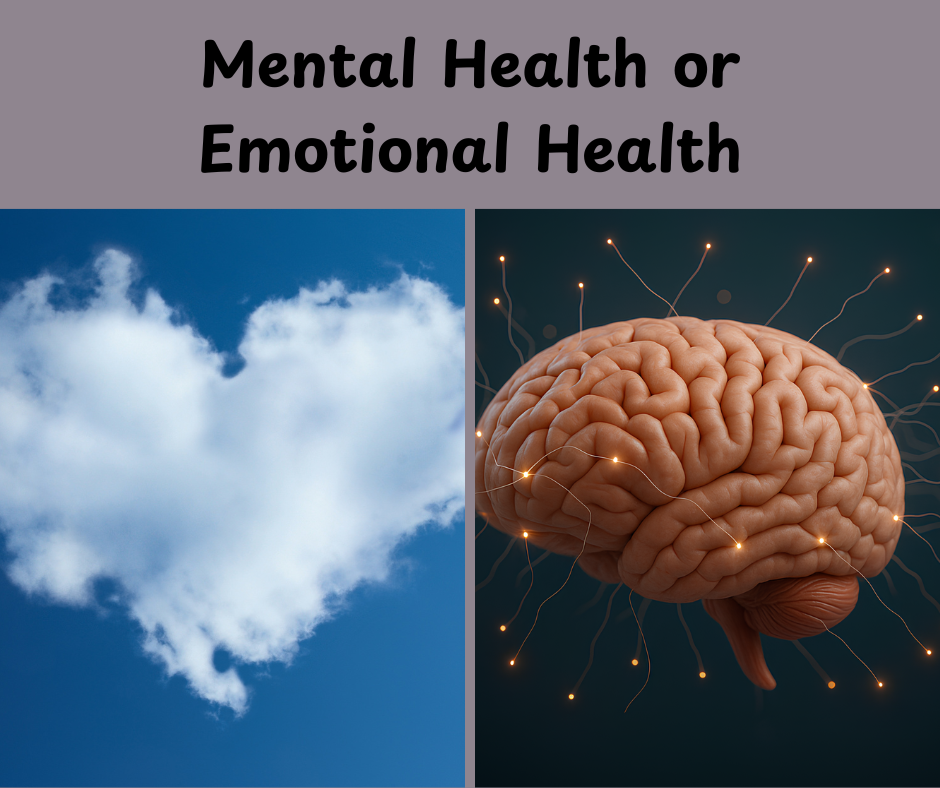
Mental Health vs. Emotional Health
People often use the terms mental health and emotional health interchangeably, but they are not exactly the same thing. Both are deeply connected, yet understanding the difference can help us better support ourselves and our children.
Mental health refers to the overall functioning of the mind. It includes how we think, process information, cope with stress, and manage conditions such as anxiety, depression, or other mental health disorders. Mental health affects daily functioning, relationships, focus, and decision-making.
Emotional health, however, is more about our ability to understand, express, and manage emotions in healthy ways. It includes emotional awareness, resilience, self-regulation, confidence, and how we respond to challenges or disappointment.
Emotional health is not something people simply “have” or “don’t have.” It can be developed and strengthened over time, just like any other skill. Learning how to manage stress, communicate emotions, recover from mistakes, calm your mind, set boundaries, ask for help, or respond instead of react all take practice. Just like students build academic skills through repetition and support, emotional health grows through awareness, healthy habits, reflection, and consistent effort. No one handles emotions perfectly all the time — the goal is not perfection, but growth, resilience, and learning healthier ways to navigate life’s challenges.
A student may be mentally healthy overall but still struggle emotionally when facing stress, failure, perfectionism, or overwhelm. Likewise, emotional health challenges can eventually impact mental health if ignored for too long.
This distinction matters because emotional health is often overlooked in conversations about education and achievement. Students are not only learning academics — they are also learning how to handle frustration, build confidence, recover from mistakes, and believe in themselves.
Healthy emotional skills support healthier minds, stronger relationships, and better learning outcomes.
Student Emotional Health Check 🌿
Read each statement and choose:
1 Never
2 Sometimes
3 Often
I get stressed when I see missing assignments or overdue work.
I shut down or give up when I do not understand something right away.
I stay up late worrying about school, grades, or tests.
I feel nervous asking a teacher or parent for help.
I get upset with myself over small mistakes.
I procrastinate because assignments feel overwhelming.
I compare my grades or abilities to those of other students.
I feel emotionally drained after a school day.
I get frustrated easily during homework.
I avoid checking grades or school apps when I’m stressed.
I feel pressure to get everything “perfect.”
I have a hard time calming down after a bad grade or difficult day.
I feel confident speaking up when I need support.
I know healthy ways to cope when I feel overwhelmed.
I can usually recover and keep trying after struggling with something difficult.
Reflection Questions
What part of school stresses you out the most right now?
What helps you feel more confident or calm during stressful weeks?
What is one thing adults could do that would help students feel less overwhelmed?
Reminder
Struggling emotionally does not mean you are lazy, bad at school, or failing. Emotional health affects focus, motivation, confidence, and learning more than many people realize.
Parent Emotional Health Check 🌿
Parenting students — especially middle and high school students — can be emotionally exhausting too.
Take a quiet moment to check in with yourself:
1 Never
2 Sometimes
3 Often
I feel stressed when checking grades, missing assignments, or school emails.
I carry worry about my child’s future, motivation, or academic success.
I feel emotionally drained after helping with homework or school struggles.
I feel pressure to “fix” everything for my child.
I get frustrated when conversations about school turn into conflict.
I struggle to know when to step in and when to let my child figure things out.
I compare my parenting or my child’s progress to other families.
I feel guilty when I cannot give my child all the support I want to.
I carry stress from work, finances, or life that affects how I respond at home.
I feel overwhelmed trying to balance parenting, work, and daily responsibilities.
I make time to care for my own emotional health.
I have healthy ways to manage stress and reset emotionally.
I feel calm and emotionally regulated during difficult school conversations.
I give myself grace when parenting feels hard.
I feel supported as a parent.
Reflection Questions
What part of parenting a student feels most emotionally exhausting right now?
What helps you reset emotionally during stressful weeks?
What kind of support do parents need more of today?
Reminder
Parents do not have to be perfect to be supportive.
Your emotional health matters too — and caring for yourself helps you care for your family well.